Sweeping permitting reform bill moves to Senate floor debate
National News

Audio By Carbonatix
11:49 AM on Tuesday, November 10
Alton Wallace
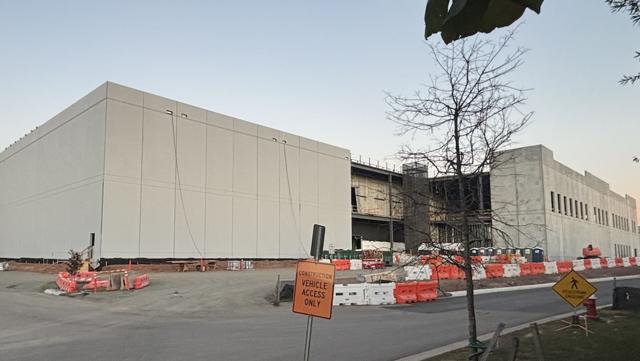
(The Center Square) - The U.S. Senate voted Monday to advance a sweeping overhaul of federal permitting laws that would require major data centers to pay for the grid upgrades they cause, protecting other electricity customers from absorbing those costs.
The Bipartisan American Affordability and Jobs Act of 2026 cleared a procedural hurdle toward Senate debate on a 73-25 vote on the first day of the lame-duck session. South Dakota's Mike Rounds was the only Republican to oppose advancing the measure.
The bill would reshape how states and counties review major energy and infrastructure projects, impose strict time limits on state and federal environmental reviews, set a 150-day deadline for certain legal challenges and restrict revocation of already approved permits. Environmental advocates and tribal groups oppose the measure over time limits on judicial reviews and consultations on historic preservation sites.
The legislation also would create a technical assistance program administered by the Department of Energy to help local officials evaluate the potential effects of data centers proposed in their jurisdictions.
U.S. Sen. Shelley Moore Capito, R-W.Va., chair of the Senate Environment and Public Works Committee, said before the vote that critical investments in energy production and the nation’s economy have been delayed for years by red tape, duplicated reviews and regulatory uncertainty.
“Communities nationwide have waited in regulatory limbo for roads, bridges, energy infrastructure, manufacturing facilities, and other investments that create jobs and strengthen local economies,” Capito said. “All this has led to lost jobs, missed economic opportunities, and higher prices across America.”
Capito said studies from the National Association of Manufacturers show permitting delays cost U.S. manufacturers $12.1 billion every year, while research from consulting firm McKinsey estimates $1.8 trillion in investments are currently stuck in the federal permitting system.
“It is time for Congress to act,” Capito said. “It’s no secret that America’s energy demand is growing rapidly to meet the needs of a modern economy. To meet these needs, we must modernize our grid, increase our energy production, and build the infrastructure that will keep America competitive and secure for decades to come.”
The West Virginia senator said major energy and infrastructure investments in her home state have collapsed under legal challenges, denying potential benefits to areas in dire need of economic growth.
“When a project sits in the environmental review and permitting processes for years, jobs are not created, critical infrastructure is not built, energy is not brought onto the grid, and ultimately, American families and businesses face higher costs and fewer opportunities,” Capito said.
U.S. Sen. Sheldon Whitehouse, D-R.I., the top Democrat on the Environment and Public Works Committee and a co-author of the bill, urged fellow Democrats to back the deal. Whitehouse said passage of the bill would result in immediate action that brings down consumers’ utility bills and prevents tech companies from shifting data center power costs onto households.
“The day of data center freeloading ends when this bill passes,” Whitehouse said at a press briefing ahead of the vote. “Data centers now have to pay for the extra cost that they bring to the grid when they come online. They do not get to have all that extra cost be dumped out into the utility’s rate base and picked up by all of the other ratepayers.”
Whitehouse said the legislation has support across a range of building trade groups and labor organizations — including the International Brotherhood of Teamsters. He added the bill would deliver increased supplies of clean energy, in part by accelerating electric transmission upgrades.
The Rhode Island senator said the bill’s passage would result in 1.5 to 1.8 gigatons of avoided carbon and other greenhouse gas emissions by 2035. He compared its projected effects with those of the Inflation Reduction Act.
“Once this bill is law, it will have a more powerful climate effect in the power sector than the IRA will have, largely because of the destruction wrought by Republicans on the IRA. This becomes our biggest implemented climate bill,” Whitehouse said.
By 2035, Whitehouse said, the bill would increase the nation’s wind capacity by 25%, solar by 28% and battery storage by nearly 70%, while cutting natural gas power by 16%.
President Donald Trump told reporters at a White House briefing near the time of the Senate floor vote that while he supports the bill, he remains opposed to wind power. “No, I will not approve wind turbines,” the president said.
The legislation would grant counties formal “cooperating agency” status during federal environmental reviews, tighten deadlines for the issuance of state Clean Water Act certifications and require data centers using 20 megawatts or more to pay for grid upgrades needed to serve them.
“Counties are on the front lines of delivering the energy, water and transportation infrastructure projects that residents depend on,” said Matthew Chase, executive director of the National Association of Counties. “This legislation would modernize the federal permitting process, reduce unnecessary delays, accelerate project delivery and ensure local expertise is incorporated into federal decision-making.”
Under the bill, the Department of Energy would have 180 days to launch a Data Center Community Assistance Program offering neutral technical assistance to help local officials evaluate a proposed data center’s effects on area power demand, water use and tax revenues, although no dedicated funding is authorized.
A group of 23 Democrats and independent Sen. Bernie Sanders of Vermont joined Rounds in voting against advancing the bill Monday. House Democratic leaders, including House Minority Leader Hakeem Jeffries, D-N.Y., oppose the bill in its current form.